Project Fair 2025
The annual project fair of METU EEE capstone projects was held in the Culture and Convention Center on June 22th, 2026
Program
- 10:00-10:30 Opening Ceremony (Kemal Kurdaş Hall)
- 10:30–12:00 Exhibition (1’st session)
- 12:00–13:00 Lunch Break
- 13:00–15:00 Exhibition (2nd session)
- 15:00 Award Ceremony (Kemal Kurdaş Hall)
Groups & Projects
The projects of this year’s participant groups are given below. You can click on group names provided in the table to reach detailed information about a specific group.
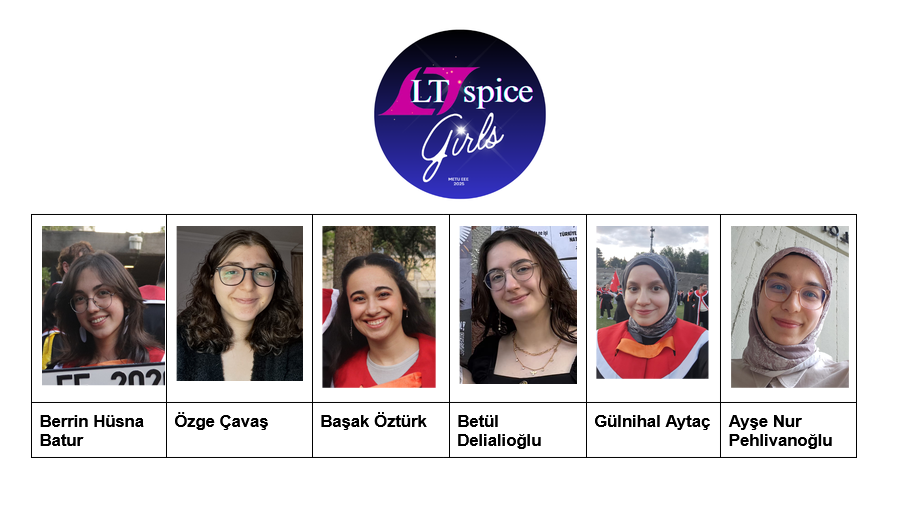

Advisor: Assist. Prof. Elif Tuğçe Ceran Arslan
(LT)spice Girls proudly presents Smart Logistics System , an affordable, multi-agent autonomous navigation system operating on a structured 3×3 physical grid. The system seamlessly coordinates three distinct autonomous vehicles (Types A, B, and C) that navigate between seven integrated smart nodes, which serve as designated sources and targets. Guided by precision QTR sensor arrays and driven by TB6612FNG motor controllers, each ESP32-powered vehicle executes accurate path-following maneuvers. The entire fleet is orchestrated by a custom Centralized Control and 3D Mapping Software, ensuring efficient task allocation, real-time status monitoring, and collision-free coordination across the grid’s transfer points. By combining low-cost embedded hardware, intelligent node infrastructure, and centralized fleet management, Smart Logistics System delivers a reliable, scalable, and fully integrated solution for automated grid-based logistics, all developed within a highly efficient $184 budget.


Advisor: Assoc. Prof. Murat Temiz
4IER designed a smart bionic prosthetic arm that uses human muscle signals (EMG) to create real-time robotic movements with ultra-low delay, 180 ms. The system has Analog sEMG Acquisition PCB’s to receive the raw bio-potential signals for the Signal Processing Unit, ESP32-S3 Microcontroller. Signal Processing Unit classifying the raw signals with %98.65 gesture accuracy for Motor-Control Unit. This unit is connected to a receiver ESP32-S3 to transmit the corresponding gesture with wireless-communication, ESP-NOW. Receiver ESP-32 is transmitting the data to the Motor-Control-Unit through an optimized UART communication. Optimized Motor-Control-Unit includes an STM32-G431 MCU & Power System to drive the corresponding DC Motors with at a low-power level, total system 17W. The total system also meets the current leakage limit, 10 μA, with 5 μA leakage.
6 ANGRY MEN
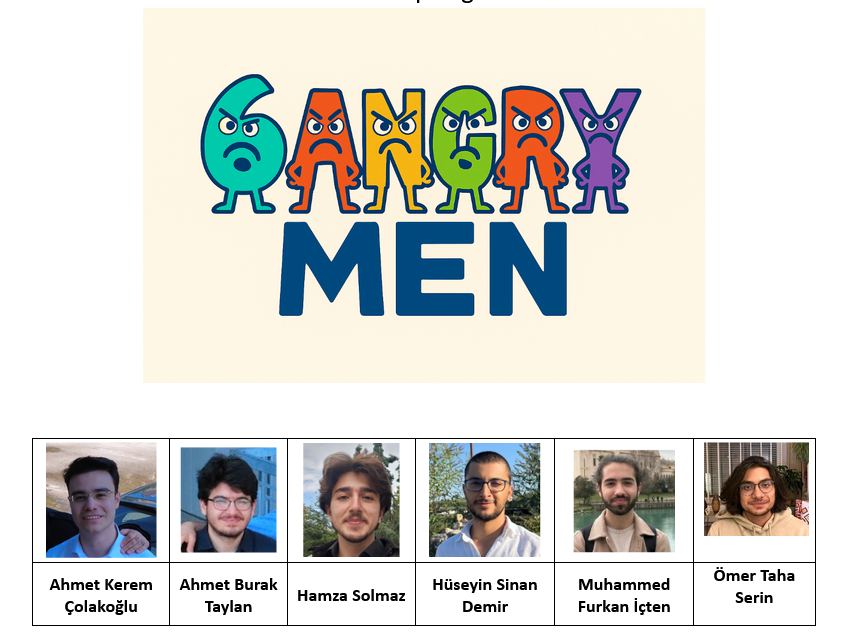

Advisor: Prof. Dr. Fatih Kamışlı
This project presents a low-cost, camera-based drone tracking system with integrated laser alignment for real-time UAV monitoring. The system combines a YOLO-based drone detector, CSRT object tracking, PID-controlled motorized pan-tilt platform driven by stepper motors, all implemented on a Raspberry Pi 5. Experimental tests demonstrated reliable drone tracking at distances up to 35 meters and speeds up to 4 m/s, while maintaining accurate laser target alignment. The system achieved near-zero false positives in open-sky environments, providing an effective and affordable alternative to conventional radar-based tracking solutions.
AutoNexa


Advisor: Prof. Dr. Behçet Murat Eyüboğlu
AutoNexa is an autonomous valet-parking and vehicle-recall platform built on a production-grade robotics stack rather than a single learned controller. The Ackermann-steered vehicle uses a two-tier architecture: a Raspberry Pi 5 (ROS 2 Jazzy) runs perception, mapping, and navigation, while a Raspberry Pi Pico handles real-time actuation with an independent watchdog and latching E-STOP. Unlike systems that depend on pre-surveyed slots or saved maps, AutoNexa builds its map live — a SLAMTEC C1 LiDAR feeds SLAM Toolbox while Nav2 (Hybrid-A* planning with an MPPI/Pure-Pursuit controller) follows collision-aware trajectories, adapting to unseen environments in real time. Operators use a Flutter app that doubles as a full console: selecting park, summon, and home waypoints, issuing commands, and monitoring pose, map, and system health. Testing in a constrained indoor testbed demonstrates reliable autonomous parking and recall with centimetre-level positioning while sustaining obstacle avoidance — a transparent, field-deployable alternative to black-box, simulation-trained systems.
BAKMOS

Advisor: Assoc. Prof. Elif Vural
Detecting and tracking small unauthorized drones near restricted airspace is still hard for radar and RF systems, especially at low altitude or against cluttered backgrounds. BAKMOS is a low-cost prototype we built to detect, track, and mark UAVs with a laser in real time. It runs a YOLOv11 Nano model on a Raspberry Pi 5 with a Hailo AI accelerator, splits power into separate motor and logic rails, and aims a 3D-printed pan-tilt rig using a search mode to find targets again after losing them. Hard negative mining cut the false-positive rate from 25% to 6%, and outdoor tests hit 100% detection at 5-20 meters. Tracking reliability reached 73.35% at 10 meters, and the system held its target through fast search-and-find cycles at close range — solid proof that the core approach works, with a clear path to push both numbers even higher. The build cost about $333.
BeeTear

Advisor: Assist. Prof. Murat Temiz
BEETEAR’s solution is a GNSS-free 3D positioning system designed for environments where satellite navigation is unreliable, such as indoor, underground, dense urban, jammed, or spoofed areas. The project uses an infrastructure-based Ultra-Wideband (UWB) network with four fixed anchors and one mobile tag to estimate real-time position within a 20 m × 20 m × 10 m volume. Distance measurements are obtained through sequential interrogation and double-sided two-way ranging, then improved using spike filtering, NLoS identification, Kalman filtering, error isolation, and boundary constraints. The system provides live 3D visualization through a GUI and aims to maintain reliable communication with less than 3% packet loss. Test results show that the design satisfies the required horizontal and vertical RMSE limits while offering a scalable, low-cost solution for GNSS-denied positioning.
cctsavascilari


Advisor: Prof. Murat Eyuboğlu
cctsavascilari proudly presents Link N Park, a compact autonomous self-parking vehicle with an integrated mobile application. Operating within a 2 m × 2 m indoor testbed, the system autonomously navigates from any valid starting pose to a user-selected parking slot, parks within the slot boundaries, and later returns to a user-defined location on a single wireless command, all while avoiding obstacles in its path. The vehicle estimates its pose in real time through AprilTag-based computer vision, generates collision-free and kinematically feasible trajectories with a Hybrid A* path planner, and executes complex forward and reverse maneuvers via a precision closed-loop path-following controller. An ultrasonic sensor array provides obstacle detection and emergency-stop safety, while the mobile app delivers intuitive control and live status monitoring. By combining low-cost sensing, embedded computation, and Ackermann-style actuation, Link N Park offers a reliable, affordable, and fully integrated autonomous parking solution.
Cerey6n
Advisor: Assist. Prof. Elif Tuğçe Ceran Arslan
DeepTech

Advisor: Assist. Prof. Elif Tuğçe Ceran Arslan
This project presents the design and implementation of the DeepTech Intelligent Parking and Vehicle Recall System, a 1:10 scaled autonomous vehicle capable of precision parking and remote summoning in a controlled indoor environment. The centralized architecture operates entirely on a single Raspberry Pi 5, eliminating secondary microcontrollers to reduce control latency. Localization relies on a highly robust dual-camera visual positioning system tracking ArUco markers, fused with IMU and wheel-encoder odometry to maintain a reliable trajectory even during visual blind spots. Path planning and tracking are executed via a Hybrid A-Star algorithm with Reeds-Shepp expansion and a bidirectional Stanley controller optimized for Ackermann steering geometry. The prototype was delivered fully operational within a $300 budget (actual cost $290) and demonstrated a mean parking accuracy of approximately 3 cm, well within the 5 cm tolerance.
DevreX
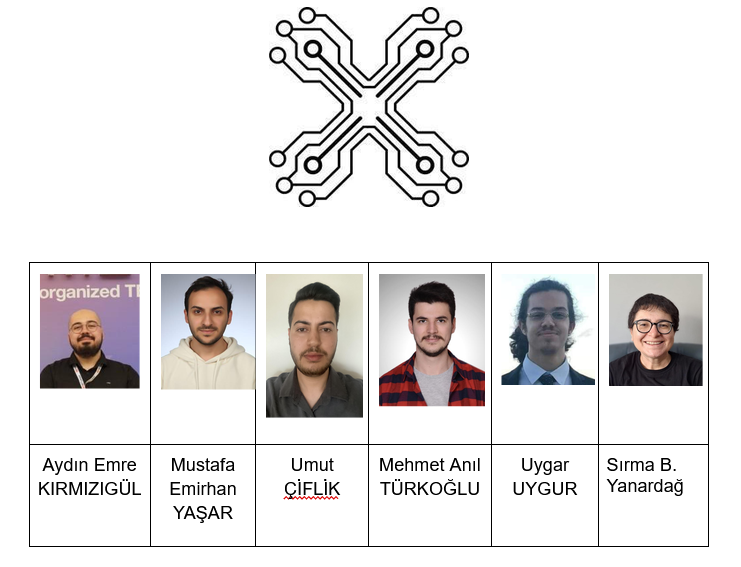

Advisor: Assoc. Prof. Sevinç Figen öktem
ParkingX is an intelligent parking and vehicle recall system designed to operate within a 2 m × 2 m test environment. It integrates camera and sensor data, reinforcement learning, and wireless communication to enable autonomous parking. A Raspberry Pi 5 serves as the main processing unit, while a mobile application allows users to select parking spaces, initiate parking or recall commands, and monitor vehicle status. Using a camera mounted on a servo motor, the system generates a 360-degree bird’s-eye view map of its surroundings. A key feature of ParkingX is its AI-based controller, trained using Unity ML-Agents to make autonomous parking decisions. Experimental results demonstrate reliable operation within the test environment, achieving a parking accuracy of ±5 cm while maintaining obstacle detection and avoidance capabilities. In summary, unlike conventional parking systems that rely on predefined slots and rigid rules, ParkingX combines AI-driven decision-making, sensor fusion, and real-time environmental mapping to adapt to diverse parking scenarios, offering a flexible, scalable, and future-ready autonomous parking platform.
EEnspire

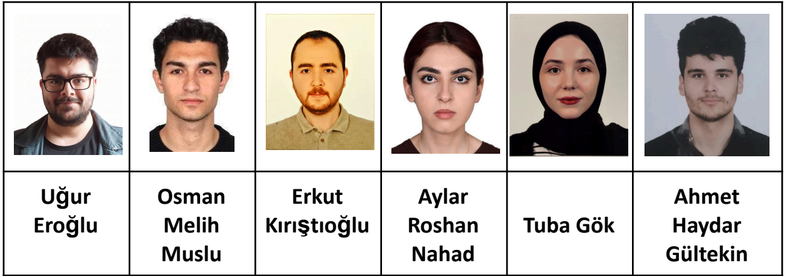

Advisor: Assoc. Prof. Elif Vural
Finding parking in dense urban environments is a growing logistical
burden, and retrieving parked vehicles without driver involvement remains a
largely unsolved consumer challenge. EEnspire Group presents the Intelligent
Parking and Vehicle Recall System, a small-scale autonomous vehicle designed
to self-park and return to a user upon receiving a remote command via a
customized mobile application. Built on a cost-effective Ackermann steering
chassis and a Raspberry Pi 4 compute domain, the platform integrates
stereo-vision-based AprilTag detection, wheel encoder odometry, and
ultrasonic proximity sensing to map its environment. To achieve reliable
localization, a highly efficient fusion algorithm bridges discrete visual updates
with continuous odometry, feeding a ROS 2 Nav2 stack configured for
non-holonomic kinematic constraints via Reeds-Shepp path generation.
Extensive testing confirmed the system’s ability to execute collision-free
trajectories, maintain safe speeds below 0.5 m/s, and achieve highly accurate
autonomous precision parking maneuvers. Ultimately, EEnspire successfully
demonstrates that robust, closed-loop autonomous navigation can be realized
on commodity hardware costing under $300.
Elma
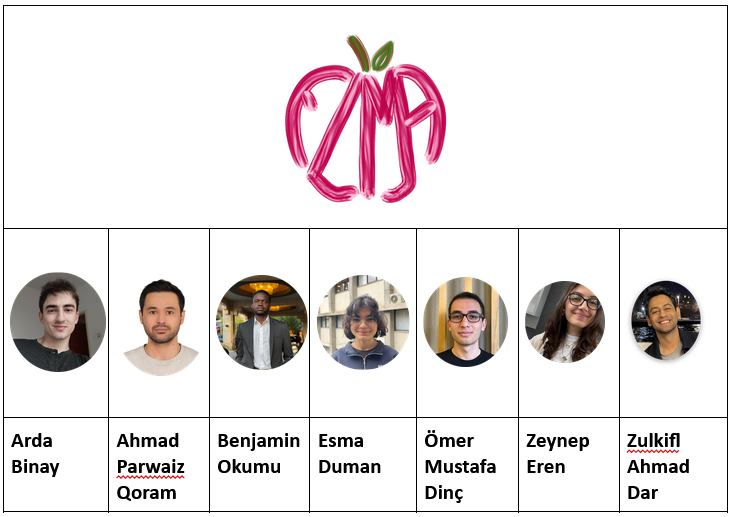

Advisor: Prof. Fatih Kamışlı
This project aims to solve parking problems on a small scale. We deliver a prototype vehicle of 30 cm with realistic proportions and kinematics that can park to a desired parking slot and can be summoned back anywhere within a 2m x 2m parking space autonomously through the mobile app. The vehicle first determines its location within the testbed thanks to the cameras mounted in the front and back, and AprilTags to then detect and place the obstacles it sees using image processing. When the user defines a parking or summon location, the Hybrid A* algorithm is used to plan an appropriate path. A modified Stanley controller is used during the car’s motion. Cameras and turning ultrasound sensors are used to detect and avoid obstacles in real time, providing a safe user experience. If the performed park is not within the 5 cm tolerance, the car plans a short fixing route to park more accurately.
General TSO
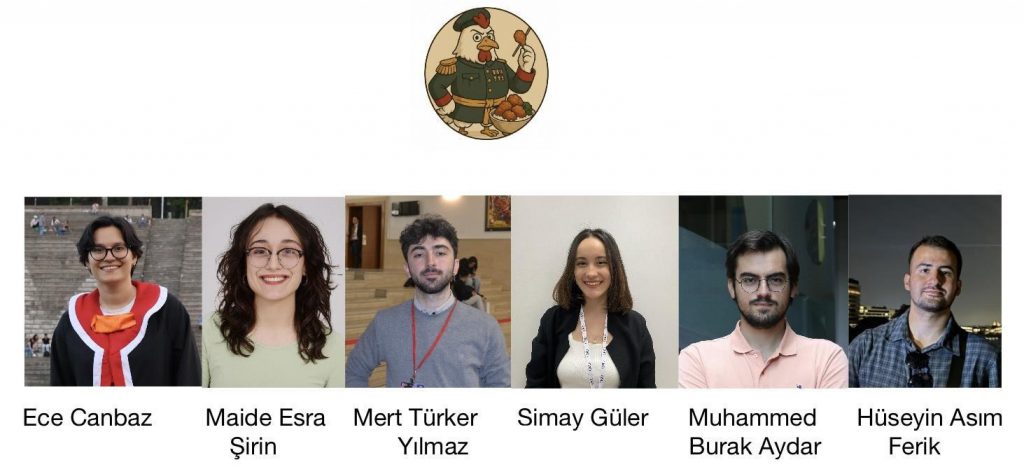

Advisor: Asst. Prof. Elif Tuğçe Ceran Arslan
General TSO Intelligent Parking System is a small-scale autonomous vehicle developed to perform parking and summoning operations without human intervention. The system combines LiDAR-based localization, AprilTag-assisted pose correction, Hybrid A* path planning, and Model Predictive Control (MPC) for accurate navigation in a structured indoor environment. A Raspberry Pi 5 serves as the main processing unit, while an STM32 microcontroller handles low-level motor and steering control on an Ackermann steering chassis.
The LiDAR sensor is used for both obstacle detection and localization, whereas AprilTags provide heading estimation and absolute pose corrections. A mobile application allows users to issue parking, summoning, and emergency stop commands through a wireless connection.
Experimental results demonstrate reliable localization with position errors below 5 cm and heading errors below 5°. The vehicle successfully completed autonomous parking and summoning scenarios while avoiding obstacles and satisfying all project performance requirements. The developed prototype demonstrates the feasibility of an integrated autonomous parking solution for future intelligent transportation systems.
GROUNDED


Advisor: Asst. Prof. Dr. Murat Temiz
To address the need for affordable monitoring of unauthorized UAVs, this project presents an autonomous pan-tilt system that visually detects, tracks, and continuously illuminates drones with a visible laser. The perception pipeline operates natively on a Raspberry Pi 5 with a Hailo-8L AI accelerator, running a YOLOv8s object detection model at approximately 30 Hz. Imaging is handled by a Raspberry Pi HQ Camera paired with a 16 mm telephoto lens. To maintain robust tracking, a 4-state finite state machine filters noise and utilizes velocity extrapolation to re-acquire temporarily lost targets. Physical alignment minimizes pixel error via a proportional-feedforward controller, driving NEMA 17 stepper motors and TB6600 drivers housed within a custom 3D-printed modular chassis. The system achieves a confirmed detection range of up to 60 meters.
Harmonix


Advisor: Prof. Behçet Murat Eyüboğlu
This project presents the design and implementation of an autonomous parking system for a preplanned indoor testbed environment. The system integrates five core subsystems: Localization and Perception, Path Planning, Motion Control, Power Management, and Communication and Mobile Application. Localization is achieved through a dual-camera architecture utilizing ArUco marker detection, providing accurate global pose estimation with a mean error of 1.36% and satisfying the ±5 cm parking accuracy requirement. Obstacle detection is enhanced using ultrasonic sensors and a safety buffer mechanism to improve reliability. Path planning and motion control operate collaboratively to generate and execute collision-free trajectories through closed-loop feedback. The complete system was implemented within a $300 budget and housed in a compact three-floor chassis. Experimental results demonstrated 57 minutes of continuous operation and successful autonomous parking performance. The proposed platform provides a cost-effective, scalable, and reliable solution for indoor autonomous parking applications while offering opportunities for future improvements in obstacle avoidance and path planning.
HorusTech


Advisor: Assoc. Prof. Elif Vural
As HorusTech, we built a Human-Machine-Interface (HMI) controlled robotic arm that addresses the need for an affordable and user-friendly solution. The product uses filtered and amplified EMG signals to control a 4-DOF robotic arm, which performs fundamental tasks such as grasping an object, carrying it, and changing its position. The EMG signals are obtained from different muscle groups in the left and right arms, and the left leg. After the signals are filtered and amplified, they are processed by a feedforward neural network (FNN) algorithm to recognize the user’s movement. The control algorithm then generates control signals for the robotic arm to execute.
The product is fully battery-powered by 9 V and 6 V batteries. It offers precise operation and features a simple, smooth control experience even with just 10 minutes of training. The total cost of the product is approximately $275, making it a highly accessible biomedical device.
Hyperion


Advisor: Assist. Prof. Murat Temiz
The proliferation of small commercial UAVs has opened a security gap that conventional radar and RF systems either miss or cannot cover affordably. We present Hyperion, a passive optical tracking system that can detect a 30 cm drone at 50 m within 3 s and track it with an eye-safe Class-2 laser during its flight path — entirely on consumer-grade embedded hardware within a US$300 budget. A dual-camera (wide + telephoto) YOLOv11-nano vision pipeline is coupled to a high-precision stepper pan-tilt assembly governed by an angle-domain Kalman filter. Comparative testing led us to reject a servo actuator in favor of a stepper design that cuts static pointing error from ~1.5° to 0.129°. All major performance requirements were met or exceeded in final validation.
Infinitech
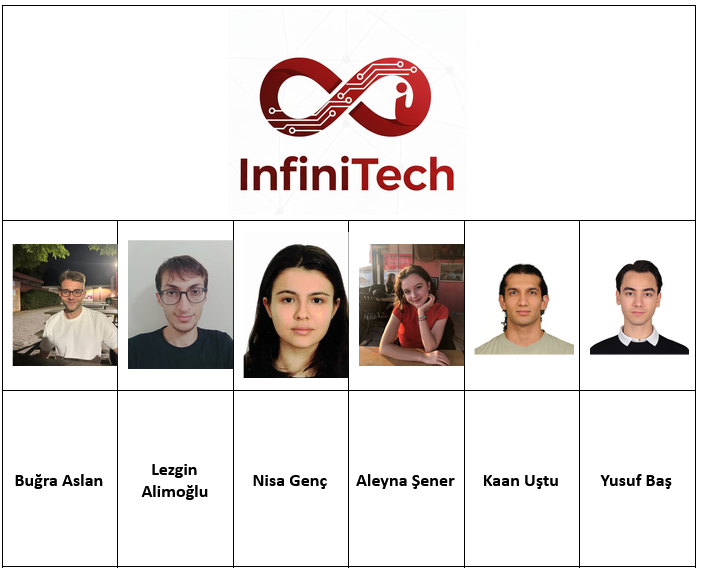

Advisor: Assoc. Prof. Sevinç Figen Öktem
We built a wireless dual-arm myoelectric prosthetic. 8 surface EMG electrodes (four per arm) capture muscle activity at 2 kHz; an acquisition unit amplifies the signals 200 V/V and ships them via a 2 Mbps NRF24L01+ radio. A Raspberry Pi 5 runs hard-real-time DSP and a RandomForest classifier resolving four gestures per arm, then commands 6 servos through a PCA9685. End-to-end latency from contraction to servo motion is 180-190 ms , well under the perceptual threshold for natural control. The video shows live bilateral gesture-driven motion.
KiD[u]2

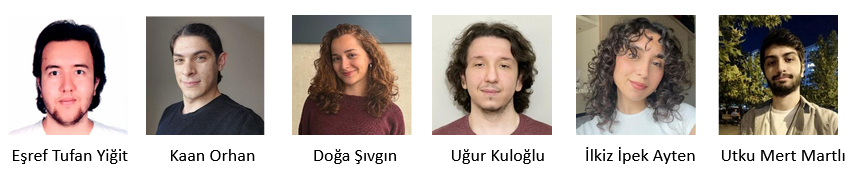

Advisor: Assoc. Prof. Elif Vural
We built a compact vehicle under 30 cm length that navigates in a 2×2 meters field autonomously. It uses Pi Camera 3 to detect the parking spot and measure the distance between the vehicle and the parking spot. There are 6 HC-SR04 ultrasonic sensors which are used for obstacle avoidance and accurate navigation. The data from these utilities are processed by Raspberry Pi 5 and Pi Pico 2W. The user can call the vehicle with the summon feature and can select any of the parking spots on the testbed with the mobile application which is connected to the vehicle via WiFi. The video shows how this vehicle parks and avoids obstacles.
Eyes: Pi Camera 3 Wide + HC-SR04 ultrasonic sensors
Body: A 3D-printed body that contains the battery, motors, and controller circuitry
User Interface: Wireless Mobile Application
Total cost: $195.6
m6nifest


Advisor: Prof. Behçet Murat Eyüboğlu
This paper presents the Intelligent Parking System, an autonomous vehicle platform designed for precise indoor navigation without expensive, computationally heavy 2D LiDAR. Traditional indoor automation struggles with the high cost and processing demands of LiDAR-based SLAM. To overcome this, our system utilizes a distributed architecture featuring a Raspberry Pi 5 and a TM4C123GXL MCU. By fusing dual-camera ArUco marker localization with a dynamic ultrasonic sensor array, the vehicle executes collision-free maneuvers. Testing demonstrated a 98% autonomy success rate and a 4.05 cm positional error, successfully delivering high-end autonomous capabilities strictly under a $300 budget constraint.
MarcoPolo Inc.
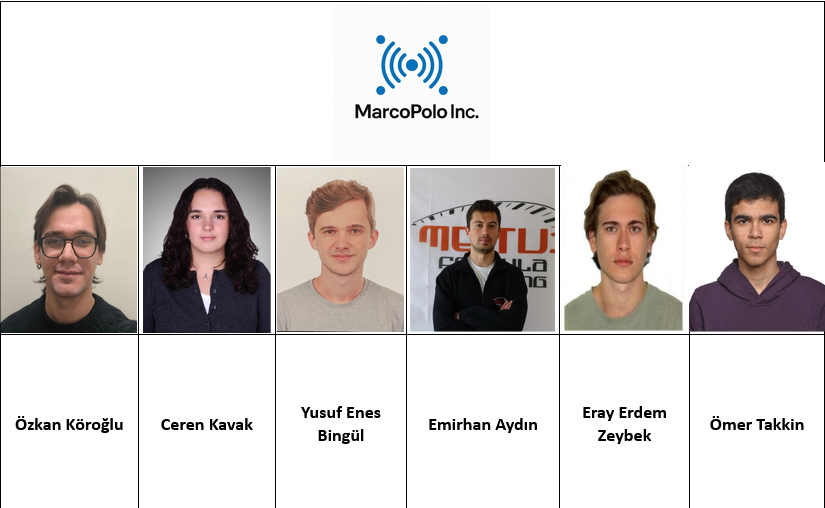

Advisor: Prof. Behçet Murat Eyüboğlu
Team MarcoPolo presents a GNSS-Free 3D Positioning System, a real-time platform that estimates the position of a mobile target in environments where GNSS signals are unavailable, unreliable, or intentionally denied. The system uses four fixed UWB anchor nodes and one mobile tag to perform two-way ranging, which is processed by localization and tracking algorithms to estimate the target’s 3D position. An Extended Kalman Filter improves position stability during movement, while vertical-height estimation leverages channel-impulse-response features to address the challenges posed by weak anchor geometry and non-line-of-sight conditions. The estimated position is displayed through a user interface for real-time monitoring. The project targets reliable sub-meter horizontal positioning and practical vertical estimation within a defined test area. Its modular, low-cost structure suits indoor navigation, emergency response, industrial tracking, and defense applications where satellite navigation cannot be trusted
MEGABS Instruments
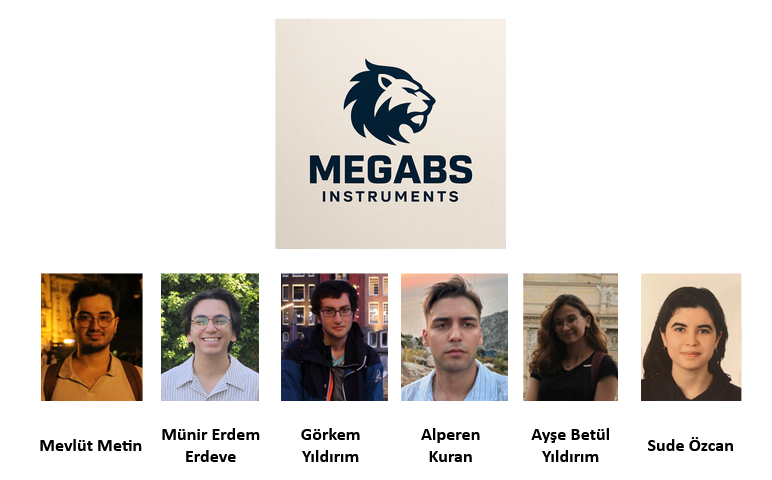

Advisor: Assist. Prof. Elif Tuğçe Ceran Arslan
We built a compact autonomous vehicle (under 30 cm long) that parks itself and returns to its owner in GPS-denied indoor environments. It utilizes a servo-driven camera to scan ArUco markers on walls, computing its absolute position with under 5 cm of error. Users can select parking spots or summon the vehicle via a smartphone application. The onboard software generates optimal paths using a Reeds-Shepp planner, actively navigating around static obstacles using front and rear ultrasonic sensors. The video demonstration showcases project features and an extreme autonomous parking scenario.
- Servo-driven rotating camera for ArUco marker localization and dual ultrasonic sensors for obstacle detection.
- A 3D-printed PLA+ chassis housing a Raspberry Pi 5, STM32 microcontroller, 12V battery pack, and DC drive motors.
- Wireless Bluetooth (BLE) smartphone application.
Total cost: 7,700 TRY ≈ $167 USD and (excluding the physical parking testbed.)
nikiti


Advisor: Assist. Prof. Murat Temiz
Unauthorized UAVs pose severe security risks to critical infrastructure, but traditional radar and kinetic defenses are expensive and hazardous. This report presents the nikiti drone tracking system, an autonomous edge-AI platform that detects, tracks, and illuminates moving drones using a non-destructive 5 mW eye-safe laser. To achieve long-range detection natively on low-power hardware, the perception layer utilizes a Hailo-8L accelerator processing a custom YOLOv8n model via a 3×2 tiled inference pipeline. Paired with a global shutter sensor and 35 mm lens, it sustains 22-23 FPS while preserving crucial target pixel density. Physical actuation utilizes a zero-backlash direct-drive stepper motor assembly with absolute encoders. Full 360° azimuth coverage is achieved via a software-defined 180°+180° flip-track logic, bypassing slip-ring complexities. Field testing confirms the system tracks 30 cm drones beyond 50 meters. The model achieved 0.982 mAP@50 with strict false-positive rejection, while actuation delivered 0.18° maximum overshoot and sub-120 ms settling times, validating this ultra-low-cost embedded architecture for high-precision optical tracking. The entire system costs $315.
OPTIMUS


Advisor: Assoc. Prof. Elif Vural
OPTIMUS Autonomous Self-Parking Car System, developed to address the inefficiencies, traffic congestion, and driver stress caused by manual parking. The project features a compact vehicle (under 30 cm) capable of precise maneuvering and executing commands via a wireless mobile application. The system employs a distributed embedded architecture, utilizing a Raspberry Pi 5 for high-level computer vision and path planning (YOLO, Homography, NMPC) and an Arduino Mega for low-level motor control and active braking. Environmental perception is achieved through a 360-degree rotating camera platform and ultrasonic sensors, with state estimation handled by an Extended Kalman Filter (EKF). Empirical tests demonstrate that the platform, operating in switchable Fast or Precise modes, successfully detects parking slots, autonomously docks with a position error below 5 cm using active braking, and reliably executes a return-to-origin recall maneuver.
OTAVYA

Advisor: Assist. Prof. Elif Tuğçe Ceran Arslan
A significant percentage of the human population suffers from disabilities related to limb loss or limb difference. It is estimated that more than 65 million people worldwide have had limb amputations. Prosthetic devices can aid these individuals in their daily tasks and even reduce mortality rates. The access to prosthetic technologies remains restricted in many societies. What sets Limb++ apart is its affordability, offering smart solutions that include many of the functionalities of the high‐end prostheses for the affordable prices of the low‐end models; along with extra control modes available through the open‐source Limb++ app. Our system utilizes non‐invasive EMG (electromyography) sensors to acquire data about the muscle activation states of the user; and through signal processing, classifies the acquired data to remotely control a robotic arm. Custom exoskeleton and limb replacement solutions for the robotic mechanism can be engineered for the needs of the user.
OYT

Advisor: Prof. Fatih Kamışlı
Autonomous navigation in GPS-denied environments (e.g., underground parking) is a critical bottleneck for Automated Valet Parking (AVP), traditionally relying on capital-intensive 3D LiDAR or infrastructure modifications. The Intelligent Parking and Vehicle Recall System by OYT eliminates these dependencies, offering a robust edge-computing platform that achieves end-to-end autonomy using monocular vision. The system integrates a Raspberry Pi 4 with a zero-latency Picamera2 pipeline and OpenCV ArUco pose estimation for real-time absolute global localization. A hybrid Dubins-Bézier path planner generates kinematically bounded trajectories respecting Ackermann steering limits. A front-facing ultrasonic sensor enables dynamic obstacle detection and replanning, while a wireless Flask Web App allows users to command autonomous parking or vehicle recall (summon). Field testing confirmed a 100% success rate in functional navigation, consistently achieving the target ±5 cm positioning margin with observed errors between 1-3 cm. The entire prototype was realized with a total hardware cost of $304.
Project-X

Advisor: Assist. Prof. Murat Temiz
Project X presents a real-time human-machine interface (HMI) prototype for restoring upper-limb motor functionality via a wireless bioelectric control loop. The embedded system architecture utilizes a split-processing topology to separate wearable signal acquisition from robotic actuation. A local Analog Front-End (AFE) node amplifies and filters raw muscle signals, which are digitized by a local microcontroller and transmitted wirelessly via a low-latency RF/BLE link to a central host microcontroller. The host processor buffers incoming data, extracts
time-domain statistical features including Root Mean Square (RMS) and Mean Absolute Value (MAV), and decodes user intent using binary logistic classification modules. Decoded commands are mapped directly to PWM outputs to drive a six-degree-of-freedom robotic arm. In functional testing, the remote system successfully executed an object-transfer task, achieving a 92.8% real-time command success rate (26 out of 28 trials) while consuming 3.136W, well below the 5W maximum threshold. However, a measured leakage current of 10 μA sits precisely at the safety limit. Future iterations must optimize firmware execution, improve gripper reliability, and increase safety margins for long-term clinical viability.
Proxima

Advisor: Prof. Fatih Kamışlı
This project presents Intelligent Parking, a small-scale autonomous parking vehicle prototype designed to perform controlled parking maneuvers in a predefined test environment. The system combines a Raspberry Pi-based main controller, a mobile application interface, Bluetooth communication, camera-based visual localization, distance sensing, path planning, and motor control. The user activates the system and selects a parking slot through the mobile application, while the vehicle estimates its position using visual markers and autonomously moves toward the selected slot. Distance sensors support obstacle detection and safety-related stop behavior during operation. Additional features such as emergency stop, recall mode, and automatic startup improve usability and reliability. Experimental tests show that the prototype achieves an 85% parking success rate, an average parking time of 55 seconds, a Bluetooth range of 10 meters, and a localization error of approximately ±5 cm. The project demonstrates a modular and low-cost approach to autonomous parking.
SANEE

Advisor: Assoc. Prof. Sevinç Figen Öktem
This project presents the design, implementation, and experimental validation of the SANEE Smart Logistics System, a centralized multi agent autonomous platform developed to optimize time sensitive digital load transportation within a structured grid environment. The system employs a heterogeneous fleet of ESP32 based semi autonomous carrier vehicles that execute synchronized, slot based movements coordinated via a Time Division Multiple Access (TDMA) wireless Wi-Fi infrastructure. To address the complex operational challenges of multi-agent coordination, heterogeneous vehicle capabilities, and collision avoidance, the centralized architecture integrates a Deep Q-Network (DQN) for dynamic task assignments alongside a Conflict Based Search (CBS) algorithm for real-time, collision free route generation. At the physical execution layer, the vehicles utilize infrared (IR) line tracking, internal measurement unit (IMU) heading estimation, and RFID-based localization to accurately navigate and perform cooperative intervehicle load transfers. Extensive system level testing validates that the integrated platform successfully achieves reliable multi agent synchronization, zero collision navigation, and optimized score realization, demonstrating a highly scalable and effective synthesis of artificial intelligence, embedded control, and wireless communication for modern automated logistics.
Signal.com

Advisor: Prof. Fatih Kamışlı
Standard Global Navigation Satellite Systems (GNSS) are inherently vulnerable to signal attenuation, blockage, and spoofing attacks, posing significant risks to applications requiring secure and resilient positioning. To address these vulnerabilities, this project presents the design and implementation of an alternative 3D positioning system that operates entirely without reliance on GNSS. The system architecture utilizes four fixed anchor nodes and a single mobile tag, using ESP32 microcontrollers integrated with DW1000 Ultra-Wideband (UWB) modules to achieve precise, real-time distance measurements. While the localized hardware handles high-frequency ranging, the core 3D positioning algorithm execution and data visualization are offloaded to an external laptop. The resulting system provides a high-accuracy localized tracking alternative suitable for GPS-denied environments and security-critical applications.
SIRIUS

Advisor: Prof. Fatih Kamışlı
Relying exclusively on Global Navigation Satellite Systems (GNSS) creates a critical security vulnerability for autonomous systems due to signal blocking, multipath reflections in urban canyons, and intentional spoofing. To address these vulnerabilities, this project presents a robust, GNSS-free 3D positioning system designed for localized navigation using signals of opportunity. The proposed solution utilizes a custom wireless protocol to extract fine-grained Channel State Information (CSI) from affordable, commercial-off-the-shelf hardware. By measuring high-precision carrier phase, the system calculates Phase-Wrapped Time of Arrival (PTOA) and Phase-Wrapped Time Difference of Arrival (PTDOA) metrics. Through round-trip phase measurements, the carrier frequency offset (CFO) is eliminated, sanitizing the data before it is fed into a robust Factor Graph Optimization framework. This framework performs real-time trajectory estimation on the mobile object, resolving phase ambiguities geometrically by enforcing kinematic motion models. Field tests prove that the system can handle poor anchor layouts and blocked lines of sight, achieving decimeter-level accuracy.
SPIDER

Advisor: Assoc. Prof. Sevinç Figen Öktem
Spider is a non-invasive upper-limb prosthetic interface that bridges the gap between high-cost capabilities and low-cost alternatives.
The fully validated system integrates three key subsystems:
- Signal Acquisition: Captures surface EMG signals using a safe, battery-isolated architecture with a negligible 0.13 μA leakage current.
- Signal Processing: An ESP32 processes data via a machine learning pipeline in 33.3 ms, achieving 93.4% gesture classification accuracy.
- Robotic Driving: Translates commands into physical motion with a system latency of 186.9 ms.
Deliverables: 1) Robotic arm 2) Embedded firmware 3) GUI application & calibration routine 4) User Manual & subsystem test reports 5) Signal Acquisition Module
Total cost: $160
Stargazer


Advisor: Prof. Behçet Murat Eyüboğlu
Team STARGAZER presents the Intelligent Parking and Vehicle Recall System, a fully autonomous platform designed to manage parking and recall tasks, alleviating the stress of urban parking. Instead of manual maneuvering, the vehicle navigates, parks, and returns to its owner entirely without human intervention. It maintains an average parking positional error of only 3.29 cm and an average angular error of 2.10° by fusing 360° LiDAR data with a vision-based ArUco pipeline to perceive its environment in real time. High-level perception and Hierarchical Hybrid A* path planning are processed on a Raspberry Pi 4B running ROS 2. Meanwhile, an Arduino Nano handles low-level actuation for the rear drive motors, a front steering servo, and a camera-panning stepper motor. A custom-built Flutter mobile application, connected via Wi-Fi, allows for seamless remote control and real-time monitoring. STARGAZER provides a scalable, robust architecture, making it highly suitable for applications ranging from dense indoor parking garages to warehouse logistics and campus shuttles.
TestLa Co.

Advisor: Assoc. Prof. Sevinç Figen Öktem
This project presents a low-cost, portable GNSS-free positioning system designed for environments where satellite navigation is unavailable, unreliable, or vulnerable to jamming and spoofing. The system uses Ultra-Wideband (UWB) Double-Sided Two-Way Ranging to measure distances between one mobile unit and four fixed anchors, followed by nonlinear least-squares trilateration and Kalman filtering for real-time 3D position estimation. To improve vertical positioning in challenging anchor geometries, Channel Impulse Response features are used to support z-axis ambiguity resolution without adding extra hardware. The final prototype integrates embedded processing on an ESP32-based UWB platform, wireless data transmission, mechanical enclosures, power management, and a real-time visualization interface. Field tests conducted in open, boundary, dynamic, and forest-like scenarios verified sub-meter-level horizontal accuracy, continuous tracking, fast update rates, and operation within the defined low-cost constraint.
THE CALL


Advisor: Assoc. Prof. Sevinç Figen Öktem
“The Call” is a highly responsive, 3D-printed bionic arm designed to provide an accessible and independent prosthetic solution. The system utilizes surface EMG sensors placed on the user’s forearm to capture electrical signals generated by natural muscle contractions. These biological signals are processed in real-time by a custom analog front-end, which translates them into digital commands to drive the device’s precise motor subsystem. This architecture enables independent, real-time control over multiple finger groups including the thumb, index, combined middle and ring, and little fingers facilitating complex and natural gestures. Furthermore, the prosthetic successfully demonstrates functional object transport, possessing the mechanical stability required to securely grasp, lift, and accurately release payloads. Powered by a simple dual-battery system and customizable via a potentiometer, the entire device is produced for under $80. Ultimately, “The Call” proves that advanced, life-changing prosthetics can be both highly capable and economically accessible.
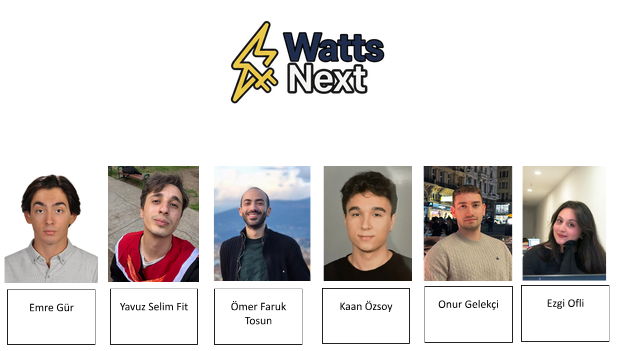
WattsNext
Advisor: Assoc. Prof. Elif Vural
WattsNext is a scale-model Automated Parking system designed to demonstrate autonomous parking and vehicle recall using low-cost embedded hardware, computer vision, and real-time control. The system combines vision-based localization, autonomous navigation, obstacle avoidance, and a mobile user interface to perform fully autonomous parking maneuvers from a single user command. A Raspberry Pi 5 executes perception and localization using OpenCV ArUco detection and solvePnP pose estimation, achieving localization accuracy within ±3 cm at approximately 20 FPS. A Raspberry Pi Pico 2W handles low-level control through a finite-state machine and Ackermann steering architecture, enabling realistic vehicle dynamics and precise maneuvering. Safety is ensured through six ultrasonic sensors providing 360° obstacle detection with an error of only 2 cm. System-level validation demonstrated collision-free operation, achieving a parking accuracy of 1 cm while remaining within a total project cost of $293.5.
